Everything You Need to Know About Motorized Rides in Lawrence
Published on October 31, 2026
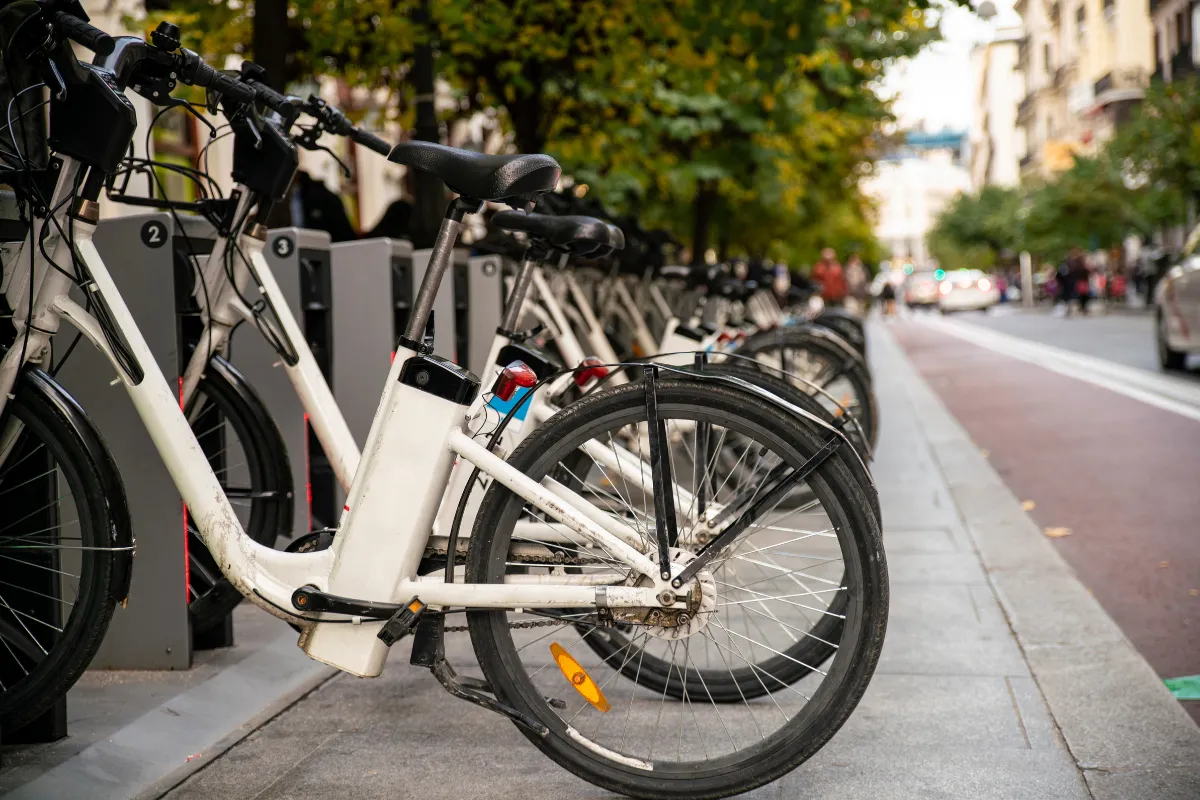
Thanks to a boom in affordability and popularity, e-bikes are zipping through Lawrence in record numbers. Children and teens, especially, can be seen riding around after class and on weekends. The Lawrence Kansas Police Department’s Officer Cody Keenan offers some insight into e-bikes, their safety, and things people and parents should consider before investing in a battery-powered vehicle of any kind.
What is an E-Bike?
An e-bike looks much like a traditional bicycle. Legal e-bikes must have pedals that are fully operational and an electric motor of 750 watts or less. The state of Kansas recognizes three classes of e-bikes:
-
Class 1 – These e-bikes are pedal assist only bicycles. The motor assistance on a class 1 e-bike stops at 20mph.
-
Class 2 – These e-bikes are throttle-assisted and can move without pedaling. The motor propulsion stops at 20mph.
-
Class 3 – These e-bikes are pedal assist only. The motor stops helping at 28mph, and they have to have a speedometer. The operator of a class 3 e-bike must be at least 16 years old.
What is not an E-bike?
It’s important to differentiate e-bikes from what many call motorbikes or e-motos. Some high-powered bikes with non-functioning pedals are marketed as e-bikes. They’re not. As a general rule, it is not considered an e‑bike if the pedals are nonfunctional, if it has no pedals, or if it is capable of reaching speeds of 30 miles per hour or more. Motorized vehicles must display a license plate. Motorbikes generally don’t have VIN numbers, can’t be registered, and are only legal to ride on private property and in closed courses.
Rules of the Road (and Sidewalks!)
Lawrence City Code currently recognizes e-bikes as regular bicycles. Here are a few things you need to know:
-
Helmets are required for anyone aged 15 and younger.
-
Bicycle traffic rules apply.
-
No sidewalk riding in the Downtown Commercial District.
-
E-bikes must yield to pedestrians.
Speed and Safety – What do medical statistics show about the risk of injury on E-Bikes?
Simply put: e-bikes are faster, and with more speed comes more (and more severe) injuries. According to data from the National Electronic Injury Surveillance System (NEISS), an estimated 15,121 pediatric e-bike injuries were treated in emergency departments between 2019 and 2023. 49.8% of those injuries occurred in 2023. This tells us that pediatric injuries from e-bikes are increasing quickly.
To bring the numbers a little closer to home, “We are very focused on identifying ways to reduce these injuries in our community and improve safety for everyone, says Lawrence Memorial Hospital’s Trauma Program Manager, Rachel O’Keefe.” From January through September of this year, Emergency Department caregivers treated 58 people who were injured on an e-bike or scooter, 20 of them were under the age of 18. Approximately 35% of the pediatric patients had to be transferred to a higher level of care when only about 3% of the pediatric patients involved in vehicle crashes required transfer for a higher level of care.
Smooth Operators: Advice for Parents, Kids, and Commuters
Before investing in motorized transportation or giving one as a gift, Officer Keenan has a few suggestions:
First, consider the age and maturity level of the rider. Class 3 e-bikes are illegal for anyone under the age of 16. Class 1 and 2 e-bikes don’t have an age requirement to ride, but careful consideration should be taken to ensure everyone’s safety. Weigh these factors first:
-
Is the rider a highly proficient bicycle rider? Before ever adding power to the mix, the rider should be very good at riding their bicycle. This means using speed when safe and appropriate, the ability to recover quickly from a near crash, and knowing what circumstances may dictate an unsafe riding environment (For sidewalks, think particularly rough sidewalks, grass and leaf covered sidewalks, and areas with heavy pedestrian traffic. For streets, think fast-moving traffic and the absence of bicycle lanes).
-
Does the rider demonstrate good decision-making skills? Riding an e-bike can add an extra layer of danger to the rider as well as people, vehicles, and other cyclists around them. Is the rider capable of making potentially split-second decisions to keep themselves and others safe?
-
Are you comfortable with the potential speed? On a Class 1 and 2 e-bike, the power stops at 20mph, and 28mph on a class 3. These speeds are significant. While a normal adult bicyclist may hit 15mph somewhat regularly on level ground, children 10-16 years old typically average 8-12mph. Constant speeds of 20+mph create new challenges and more potential for injuries.
Second, be sure your budget has room for the helmet. Regular bicycle helmets are not suitable for e-bikes! There are different levels of helmets, but safety experts recommend an NTA 8776 rated helmet for e-bike use. These helmets are tested against higher-energy performance requirements and offer more protection, including material around the temples and back of the head. There are cost-effective options for NTA 8776 helmets, and Officer Keenan points out that special features (including lights, visors, and turn signals) are just features, not safety certifications.
Third, consider where the bike will be ridden. For example, if the rider (or rider’s parent) prefers the sidewalk, remember that sidewalks were not built with speed in mind. They are at a higher risk for cracks, holes, weeds, and foliage, which can all be dangers to riders. Roadways are better maintained for speed, but streets are also not without risk. Consider the streets and sidewalks in your neighborhood before investing in an e-bike.
If any parents still aren’t sure whether or not an e-bike is a good fit for their kiddo, Officer Keenan advises, “Just because it’s legal for them to operate an e-bike, that does not mean your child or teen is developmentally ready to operate one. A parent or caregiver should consider the individual child’s maturity level and experience before allowing them to ride an e-bike.”
Officer Cody Keenan from the Lawrence Police Department has 8 years of law enforcement experience, is part of the Accident Investigation Unit, is a Child Passenger Safety Technician, and is the Department Liaison for SAFE Kids Douglas County.